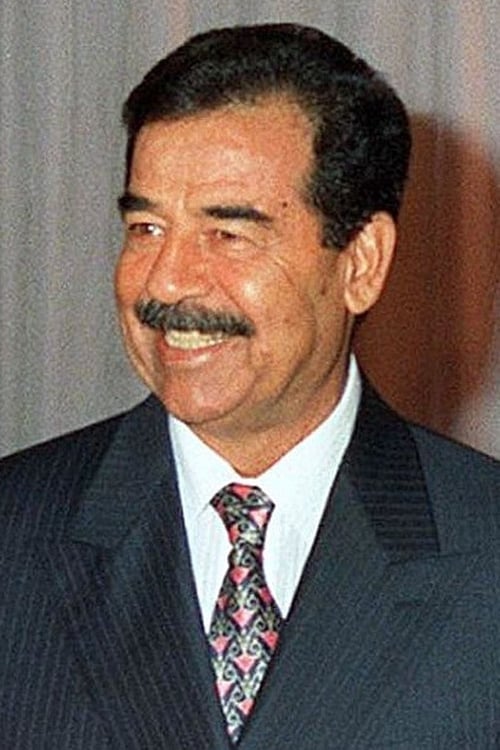
Saddam Hussein was a prominent Iraqi political figure who held the office of the fifth president of Iraq from July 16, 1979, until April 9, 2003. A significant force in the Arab Socialist Ba'ath Party, he rose to power as a key member of the party, which espoused a blend of Arab nationalism and socialism.
Hussein's tenure was marked by a series of ambitious modernization efforts and attempts to establish Iraq as a dominant regional power. His administration is often noted for its authoritarian governance and the brutal suppression of dissent, particularly during the Iran-Iraq War (1980-1988) and the Gulf War (1990-1991). His regime was characterized by human rights violations and widespread atrocities, including the infamous Anfal campaign against Kurdish populations.
In 2003, following the U.S.-led invasion of Iraq, Saddam Hussein was deposed, leading to his eventual capture. He faced trial for crimes against humanity, culminating in a conviction and a death sentence, which was carried out on December 30, 2006. Hussein's complex legacy remains a topic of intense debate, reflecting his impact on Iraq's history and the broader Middle East, as well as the geopolitical landscape of the region during his rule.
Hussein's tenure was marked by a series of ambitious modernization efforts and attempts to establish Iraq as a dominant regional power. His administration is often noted for its authoritarian governance and the brutal suppression of dissent, particularly during the Iran-Iraq War (1980-1988) and the Gulf War (1990-1991). His regime was characterized by human rights violations and widespread atrocities, including the infamous Anfal campaign against Kurdish populations.
In 2003, following the U.S.-led invasion of Iraq, Saddam Hussein was deposed, leading to his eventual capture. He faced trial for crimes against humanity, culminating in a conviction and a death sentence, which was carried out on December 30, 2006. Hussein's complex legacy remains a topic of intense debate, reflecting his impact on Iraq's history and the broader Middle East, as well as the geopolitical landscape of the region during his rule.